


Indigo ProForce Battalia 435 20L. Pendimethalin

Group 3 Herbicide
Battalia 435 Herbicide is a pre-emergent herbicide containing 435g/L of the active ingredient Pendimethalin. It is registered for the control of Summergrass, Crowsfoot Grass and Wintergrass in a range of warm and cool season turfgrass species. This formulation of Pendimethalin is a proven performer and offers an economical and reliable option for pre-emergent weed control for turf and irrigation channel situations.
Key Features
- Offers an economical form of pre-emergent weed control for turf and irrigation channels.
- Low chemical scheduling (Schedule 5 – Caution), lower PPE requirements.
- High loaded formulation, 435g/L.
- Good turf safety characteristics, when used on established, high cut turf situations.
- Predictable residual performance with a half life of around 30-40 days.
- Reduced hydrocarbon solvent loading in the product, over some other forms of pendimethalin.
- Low solubility and very high soil binding capacity, offering limited leaching potential.
- No withholding period.
- Possesses useful tank mix compatibility with other herbicides. Stable in a pH of 4-9.
- Available in HPDE drums.
Maximising Performance:
- Apply prior to germination of weeds.
- Weed Germination Temperature Ranges are as follows:
- Winter Grass: 10-150C
- Summer Grass: 12-150C
- Crowsfoot: 16-180C
- Soil Temperature based off daily average (9am temp + 3pm temp / 2) at a 10cm depth.
Weeds Controlled
BROADLEAF WEEDS
- Blackberry Nightshade (Solanum nigrum)
- Fat Hen (Chenopodium album)
- Pigweed (Portulaca oleracea)
- Chickweed (Stellaria media)
- Wireweed (Polygonum aviculare)
- Shepherd’s Purse (Capsella bursa-pastoris)
- Common Sowthistle (Sonchus oleraceus)
- Stagger Weed (Stachys arvensis)
- Lesser Swinecress (Coronopus didymus)
- Prickly Lettuce (Lactuca serriola)
- False Caper (Euphorbia terracina)
- Spiny Emex / Three-Cornered Jack (Emex australis)
- Wild Radish (Raphanus raphanistrum)
- Common Cotula (Cotula australis)
GRASSY WEEDS
- Annual Ryegrass (Lolium rigidum)
- Barnyard Grass (Echinochloa crus-galli)
- Summer Grass (Digitaria ciliaris)
- Winter Grass (Poa annua)
- Crowsfoot Grass (Eleusine indica)
- Liverseed Grass (Urochloa panicoides)
- Crab Grass (Digitaria sanguinalis)
These weeds are controlled when Battalia 435 is used pre-emergent or incorporated into soil before sowing, in a wide range of crops and established turf, as specified on the product label.
Mode of Action
Pendimethalin, the active ingredient in Battalia 435 is a member of the dinitroaniline (DNA) herbicide Group 3 (previously Group D). The primary mode of action of Battalia 435 Herbicide is to inhibit microtubule formation in cells of susceptible weeds which are an important part of the cell division process. As a result of restricted cell division, growth of the emerging weed seedling is prevented, eventuating in death due to lack of available food reserves. Because Battalia 435 does not translocate a great deal from the site of uptake within the plant, it is necessary for the emerging weed seedling’s roots to absorb pendimethalin from the soil. Pendimethalin binds to organic matter and clay materials and primarily stays within the top few centimetres of soil. Selectivity in turf is caused by differences in germination depth of susceptible grass seedlings that absorb the pendimethalin in the top layer of soil, compared to the growing points in the turf’s roots system that is at a greater depth and is unable to uptake the pendimethalin.
SHORT DESCRIPTION
ProForce Battalia 435 Herbicide is a pre-emergent Group D herbicide for controlling annual grasses and broadleaf weeds in crops and turf. It provides reliable residual control and is ideal for use before planting or weed emergence across a wide range of agricultural and turf situations.
ACTIVE INGREDIENTS
435 g/L Pendimethalin
SOLVENT:
473 g/L Liquid Hydrocarbon
APPLICATION INFORMATION
APPLICATION INFORMATION AND RATES – PROFORCE BATTALIA 435 HERBICIDE
Crop: Canola
Rate: 1.1 to 1.7 L/ha
Timing: Pre-sowing incorporated by sowing
Comments: Apply to moist, well-prepared soil. Use higher rate on heavier soils or with higher weed pressure. Sow crop within 24 hours of application.
Crop: Faba Beans
Rate: 1.1 to 1.7 L/ha
Timing: Pre-sowing incorporated by sowing
Comments: Sow crop within 24 hours after application. Use higher rates on heavier soils or where weed pressure is high.
Crop: Chickpeas
Rate: 1.1 to 1.7 L/ha
Timing: Pre-sowing incorporated by sowing
Comments: Use on well-prepared seedbeds. Ensure even incorporation and timely sowing.
Crop: Field Peas
Rate: 1.1 to 1.7 L/ha
Timing: Pre-sowing incorporated by sowing
Comments: Apply to moist soil and sow within 24 hours.
Crop: Lentils
Rate: 1.1 to 1.7 L/ha
Timing: Pre-sowing incorporated by sowing
Comments: Use higher rate on clay or loam soils. Do not use on sandy soils with low organic matter.
Crop: Lupins
Rate: 1.1 to 1.7 L/ha
Timing: Pre-sowing incorporated by sowing
Comments: Avoid overlapping and ensure uniform application.
Crop: Soybeans
Rate: 1.1 to 1.7 L/ha
Timing: Pre-sowing incorporated by sowing or pre-emergent
Comments: Incorporate with rainfall or irrigation if not using mechanical incorporation.
Crop: Rice (drill sown)
Rate: 2.2 to 3.3 L/ha
Timing: Pre-sowing incorporated by sowing
Comments: Apply to moist soil, incorporate with sowing.
Crop: Established Turf
Rate: 1.5 to 3.0 L/ha
Timing: Pre-emergent
Comments: Apply prior to weed germination. Do not apply to newly seeded turf. Use higher rate for heavy weed infestations or on heavier soils. Water in within 24 hours.
Weeds Controlled (examples)
Annual Ryegrass (Lolium rigidum)
Barnyard Grass (Echinochloa crus-galli)
Wireweed (Polygonum aviculare)
Winter Grass (Poa annua)
Summer Grass (Digitaria spp.)
Pigweed (Portulaca oleracea)
Blackberry Nightshade (Solanum nigrum)
Fat Hen (Chenopodium album)
Chickweed (Stellaria media)
Application Volume
Ground Application: 50–200 L/ha
Aerial Application (specific crops only): 30–50 L/ha
Equipment
Use flat fan nozzles for even coverage
Calibrate equipment to ensure correct application rate
Maintain agitation during spraying
Incorporation Method
Use mechanical incorporation (e.g. sowing equipment) or rainfall/irrigation
Ensure soil is moist and well-prepared before application
WEEDS CONTROLLED
WEEDS CONTROLLED – PROFORCE BATTALIA 435 HERBICIDE
BROADLEAF WEEDS
Blackberry Nightshade (Solanum nigrum)
Fat Hen (Chenopodium album)
Pigweed (Portulaca oleracea)
Chickweed (Stellaria media)
Wireweed (Polygonum aviculare)
Shepherd’s Purse (Capsella bursa-pastoris)
Common Sowthistle (Sonchus oleraceus)
Stagger Weed (Stachys arvensis)
Lesser Swinecress (Coronopus didymus)
Prickly Lettuce (Lactuca serriola)
False Caper (Euphorbia terracina)
Spiny Emex / Three-Cornered Jack (Emex australis)
Wild Radish (Raphanus raphanistrum)
Common Cotula (Cotula australis)
GRASSY WEEDS
Annual Ryegrass (Lolium rigidum)
Barnyard Grass (Echinochloa crus-galli)
Summer Grass (Digitaria ciliaris)
Winter Grass (Poa annua)
Crowsfoot Grass (Eleusine indica)
Liverseed Grass (Urochloa panicoides)
Crab Grass (Digitaria sanguinalis)
These weeds are controlled when Battalia 435 is used pre-emergent or incorporated into soil before sowing, in a wide range of crops and established turf, as specified on the product label.
PRODUCT LABEL SUMMARY
Full Product Label Summary – Indigo Battalia 435 Herbicide (20L)
Product Name
ProForce Battalia 435 Herbicide
Active Constituent
435 g/L Pendimethalin
Solvent: 473 g/L Liquid Hydrocarbon
Herbicide Group
Group D Herbicide
Signal Headings
Caution
Keep out of reach of children
Read safety directions before opening or using
Pack Size
20 L
Manufacturer
Indigo Specialty Products Pty Ltd
ABN 15 631 459 660
6/163-173 McEvoy Street, Alexandria NSW 2015
Phone: 0402 725 887
APVMA Approval Number
68776/122759
General Use
For the control of wireweed, annual grasses (including annual ryegrass) and certain broadleaf weeds in a wide range of crops and situations
Directions for Use
Detailed tables outline specific crop types, states, weed species, application timing, rates, and critical comments
Methods include pre-plant incorporation, post-plant pre-emergence, pre-transplant, and established turf treatments
Restraints
Do not sow sensitive summer crops within 12 months
Do not apply to poorly prepared seedbeds
Do not mix with atrazine on heavy clay soils
Avoid application where waterlogging may occur
Application Methods
Ground spraying
Aerial spraying (only for certain crops like soybeans and rice)
Spray volumes: 50–200 L/ha
Nozzle type: Flat fan
Special care for incorporation depending on method and crop type
Mixing
Add to partly filled spray tank, mix thoroughly
Tank mix compatible with several herbicides including atrazine, diuron, glyphosate, simazine, and more
Incorporation
Essential for effectiveness – mechanical or via irrigation/rainfall
Depth and thoroughness critical to performance
Special notes for cereal seed dressings and weather conditions at planting
Re-Entry Period
Do not allow entry for 12 hours
If early entry is required, wear protective gear
Withholding Period
Not required when used as directed
Weeds Controlled
Extensive weed tables (A to D) covering broadleaf and grass species in different crops
Examples: Barnyard Grass, Wireweed, Summer Grass, Winter Grass, Blackberry Nightshade, Pigweed, Chickweed, Fat Hen
Resistance Warning
Group D – inhibition of tubulin formation
Resistant weed biotypes may develop; use as part of resistance management
Compatibility
Compatible with a wide range of herbicides including glyphosate, simazine, atrazine, diuron, paraquat, and more
Protection Statements
Avoid spray drift
Do not contaminate water sources
Do not apply under conditions that may lead to off-target drift
Storage and Disposal
Store in a cool, dry, well-ventilated area
Triple rinse containers before disposal
Do not burn product or containers
Refillable containers should be returned to supplier
Safety Directions
Harmful if swallowed
Irritating to eyes, skin, nose, and throat
Avoid contact with skin and eyes
Wear protective clothing, gloves, and face protection
Wash hands and contaminated clothing after use
First Aid
If poisoning occurs, contact a doctor or Poisons Information Centre
Australia: 13 11 26
New Zealand: 0800 764 766
Do not induce vomiting if swallowed
Safety Data Sheet
Available from Indigo Specialty Products Pty Ltd on request
Conditions of Sale
Use only as directed
No liability for off-label or incorrect use
LABEL, SDS & TECH SHEET
SHIPPING & RETURNS
Greenway Weed Solutions has a distribution centre in QLD only. All orders, Australia-wide will be shipped from this location.
Shipping is free on all online orders. Bulk purchase shipping rates are determined by total order weight and delivery location.
Pickups are available from the QLD warehouse. Updates to product availability in other Australian warehouses are upcoming.
Choose options
explore our latest Blogs

Understanding Herbicide Modes of Action
Selecting a herbicide involves more than identifying the target weed. To achieve reliable long term vegetation outcomes, vegetation managers must also understand how herbicides work within the plan...
Read more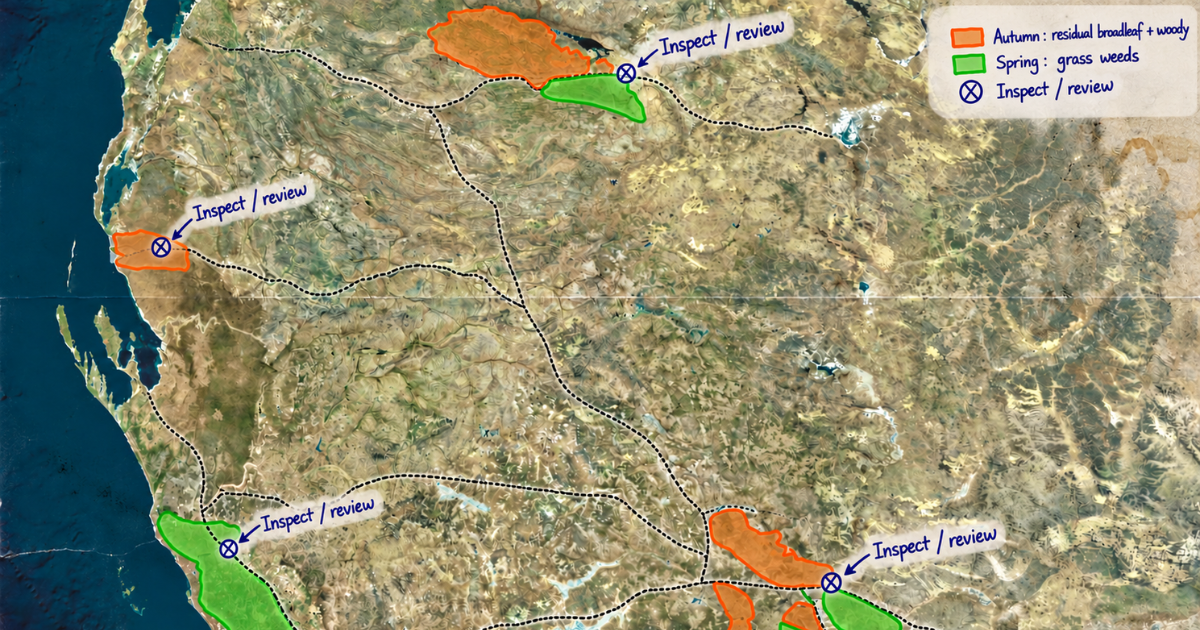
Developing an Annual Vegetation Management Plan for Infrastructure Assets
An Annual Vegetation Management Plan provides the framework for managing infrastructure assets safely, efficiently and sustainably throughout the year. Rather than responding to issues as they aris...
Read more
Selecting Herbicides Within an Integrated Vegetation Management Program
Effective herbicide selection begins long before a product is chosen. Within an Integrated Vegetation Management (IVM) program, herbicides are selected to support clearly defined management objecti...
Read more