

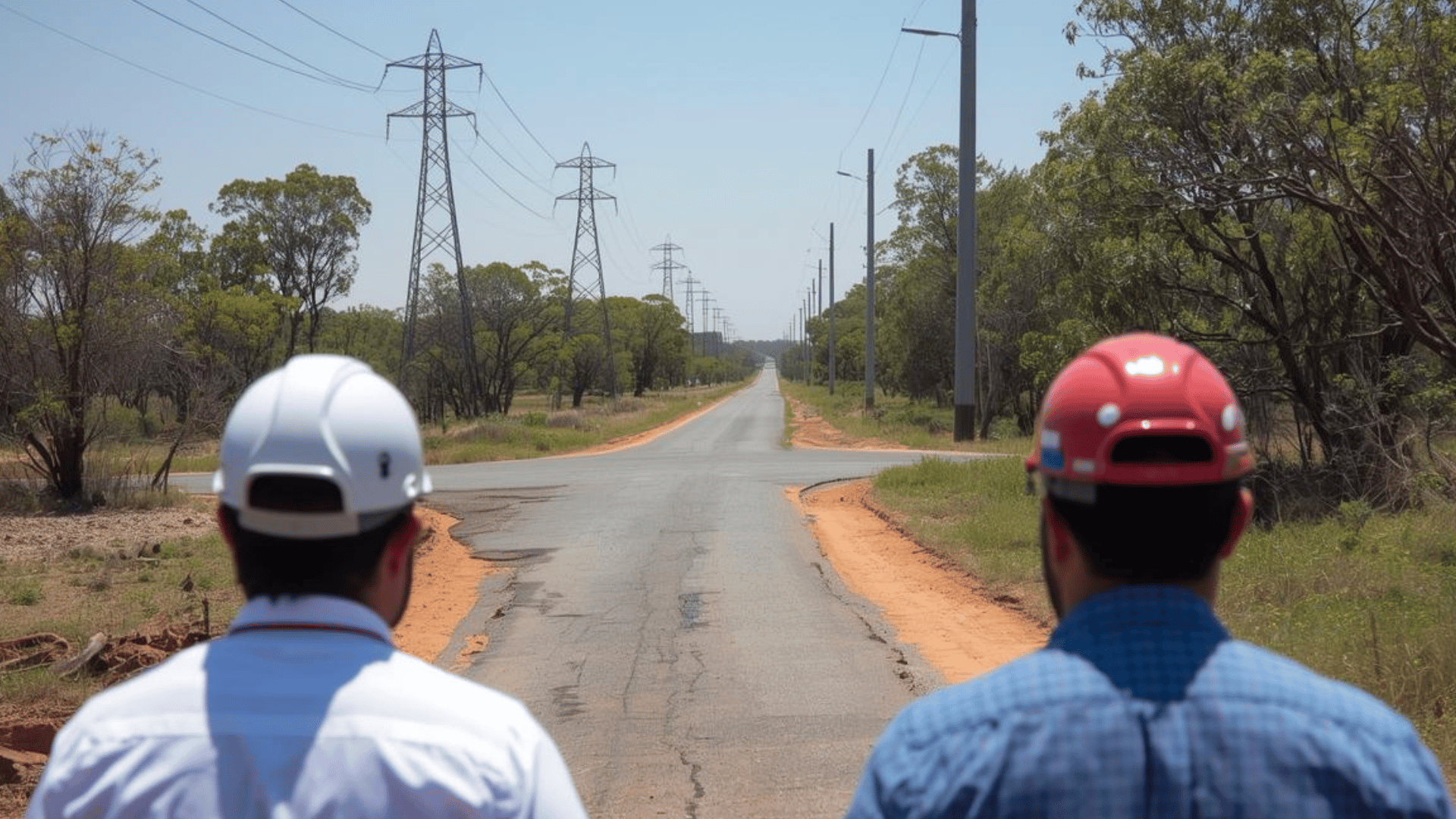
Transitioning Vegetation Contracts Without Losing Control | Integrated Vegetation Management Series 2026 Article 4
As Integrated Vegetation Management gains traction, one question consistently arises, how do we change contracting models without increasing risk or losing governance control.
This concern is understandable. Prescriptive schedules of rates feel safe. They are familiar, easy to procure and easy to audit. However, they are also largely blind to outcomes, risk and long-term stability.
The challenge is not whether to change, but how.
Most organisations do not move directly from prescriptive contracts to fully outcome-based models. Instead, successful transitions follow a staged approach that preserves control while introducing IVM principles progressively.
The first step is recognising that not all assets require the same contracting model. Low consequence areas may continue under prescriptive arrangements, while higher risk corridors and sites are better suited to outcome based or hybrid approaches.
Hybrid models are often the most effective transition mechanism. They retain baseline activities required for compliance and safety, while introducing outcome measures, condition thresholds and risk triggers in priority areas. This allows asset owners and managers to test and refine IVM delivery without abandoning existing controls.
Critically, outcome-based contracting does not remove oversight. It changes it.
Rather than auditing whether activities occurred, governance shifts toward verifying whether agreed outcomes were achieved and whether interventions were triggered appropriately. Evidence becomes central. Inspection records, trigger registers and performance dashboards provide a clearer line of sight into program effectiveness than activity logs alone.
For service providers and contractors, this transition creates an opportunity to demonstrate capability. Those able to design programs, manage risk and produce defensible evidence are rewarded. Those relying solely on volume and frequency are exposed.
The organisations that transition most successfully are those that treat contracting as a governance tool rather than an administrative exercise. Contracts become instruments that reinforce intent, clarify accountability and support better decisions.
Integrated Vegetation Management does not remove control. When implemented correctly, it strengthens it.
In the next article, we will examine the role of evidence, assurance and governance in making outcome based IVM programs defensible under scrutiny.

Additional content
VIEW GWS' ADDITIONAL CONTENT TO LEARN MORE ABOUT THE WEED INDUSTRY
Selecting Herbicides Within an Integrated Vegetation Management Program
Effective herbicide selection begins long before a product is chosen. Within an Integrated Vegetation Management (IVM) program, herbicides are selected to support clearly defined management objecti...
Read more
Integrated Vegetation Management: Managing Outcomes, Not Treatments
A vegetation program is not defined by how many times a crew sprays or mows. It is defined by whether the asset is safe, functional and being managed to an agreed standard over time. Integrated Veg...
Read more
Supply disruption is a chance to review, plan and rotate.
When a major product becomes unavailable, it creates an important moment for the industry to pause, review and adapt. The recent supply disruption affecting a key industrial residual herbicide is a...
Read more