
Wildlife and Pest Management in Australia, Complexity, Trade-offs, and the Need for Integrated Decision Making
Australia’s approach to wildlife and pest management is increasingly complex. What was once framed as a largely technical or ecological challenge now sits firmly at the intersection of environmental science, legislation, public policy, social licence, and human behaviour. For land managers, asset owners, regulators and contractors, this complexity is no longer theoretical. It plays out daily across national parks, peri urban landscapes, agricultural land, infrastructure corridors, and high visitation natural assets.
At Greenway Weed Solutions, we operate within this complexity. While our core focus is vegetation management, weed control and land stewardship, these activities are inseparable from broader ecosystem dynamics and governance settings. Understanding the wider wildlife and pest management context is essential to delivering outcomes that are effective, defensible and sustainable over time.
Introduced Species and Legislative Constraints
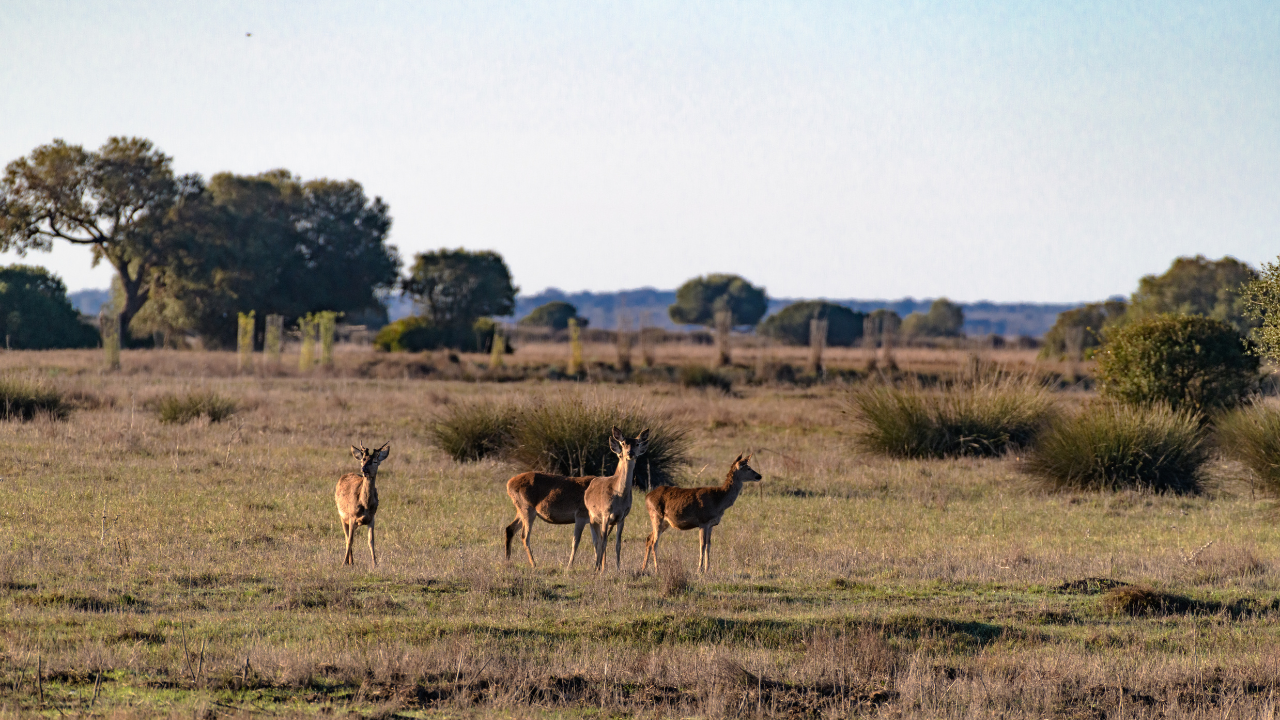
One of the most visible and contested issues across multiple states is the management of introduced species such as deer. In several jurisdictions, deer are afforded varying levels of protection, including classification as game species or inclusion under legislation that limits management options within national parks and conservation reserves. At the same time, deer populations continue to expand rapidly into peri urban, agricultural and infrastructure landscapes, creating significant impacts on native vegetation, crop production, road safety and biosecurity.
Dedicated management authorities and advisory bodies have been established to address these challenges, often with complex governance arrangements spanning multiple departments. However, the effectiveness of these structures is frequently constrained by legislative limitations, fragmented responsibility and competing stakeholder interests. This can reduce the ability to act early, adaptively and at scale, allowing populations and impacts to escalate before meaningful intervention occurs.
From a land management perspective, delayed action almost always results in higher long-term costs, greater ecological damage and increased community conflict. Early intervention, even when politically or socially difficult, is more effective and less disruptive than reactive crisis management and far more cost effective in the long run.

Feral and Unmanaged Domestic Animals
The issue of feral and unmanaged domestic animals, particularly cats, further illustrates the gap between evidence and outcomes. There is extensive, long-standing research documenting the impacts of cats on native fauna, including threatened species. Despite this, inconsistent approaches to registration, containment, enforcement, and education mean that impacts remain widespread and largely unmanaged across many landscapes.
This reflects a broader systemic challenge. Policy frameworks and management plans alone do not deliver outcomes. Without community buy in, behavioural change and consistent enforcement, even well-designed strategies fail to achieve their objectives. For land managers and contractors, this often results in downstream pressure to mitigate impacts that could have been avoided through upstream governance and compliance.
Apex Predators and Ecological Trade Offs
The management of apex predators highlights the complexity of ecological trade-offs and unintended consequences. The suppression or removal of predators from landscapes has, in many cases, contributed to population surges in herbivores such as kangaroos. These surges are often followed by overgrazing, habitat degradation, and starvation events, creating both ecological harm and significant animal welfare concerns.
These outcomes demonstrate that both intervention and non-intervention carry consequences. Decisions made in isolation, without a systems level understanding of trophic relationships and landscape capacity, can shift impacts rather than resolve them. Effective management requires recognising that ecological systems respond dynamically to change, and that simplistic solutions rarely deliver stable outcomes.

Human Behaviour and High Interaction Landscapes
The human dimension of wildlife management is most visible in high visitation environments such as K’gari. Despite clear guidelines, signage and education efforts, behaviours such as feeding dingoes continue to occur. These actions undermine management strategies, increase risk to visitors and animals, and place additional pressure on managers to respond to incidents after they occur.
These situations are often portrayed as wildlife management failures. In reality, they are more accurately failures of compliance, education, enforcement and social norms. Wildlife management outcomes in these contexts are inseparable from human behaviour, and any strategy that does not actively address this dimension is unlikely to succeed.
Implications for Land and Vegetation Management
For organisations involved in vegetation management, weed control and land stewardship, these broader dynamics matter. Wildlife pressure influences vegetation condition, regeneration outcomes, erosion risk and weed establishment. Policy settings influence what can and cannot be managed, when intervention is permitted, and how actions are perceived by the community.
At Greenway Weed Solutions, we see the consequences of fragmented decision making firsthand. Weed management programs can be undermined by unmanaged grazing pressure. Revegetation efforts can fail where feral animal impacts are not addressed. Compliance driven constraints can limit timely intervention, increasing long term cost and risk.
The Need for Integrated Approaches
What emerges consistently across jurisdictions and asset types is the need for integrated approaches. Effective wildlife and pest management requires alignment between ecological science, legislative frameworks, enforcement mechanisms and community expectations. It requires institutions that are empowered to act, policies that enable adaptive management, and communities that understand both the costs of action and the costs of inaction.
Critically, it also requires acknowledging that difficult decisions are sometimes necessary to prevent larger ecological, economic and social costs in the future. Avoiding action to preserve short term comfort often results in more severe outcomes later.
Moving Beyond Simplistic Narratives
Simplistic narratives rarely reflect the reality on the ground. As pressures increase from urban expansion, climate variability, changing land use and growing community engagement with natural areas, the challenges facing land and wildlife managers will only intensify.
Progress depends not only on which species are managed, but on how decisions are made, communicated and implemented. Mature, evidence-based conversations are essential, as is transparency around objectives, trade-offs and outcomes.
For Greenway Weed Solutions, engaging with this complexity is part of our commitment to responsible land management. By understanding the broader ecological and governance context, we are better positioned to support clients with solutions that are practical, compliant and aligned with long term landscape health.
A balanced, adaptive and science grounded approach, supported by genuine social licence, will be essential if Australia is to manage shared landscapes effectively into the future.

Additional content
VIEW GWS' ADDITIONAL CONTENT TO LEARN MORE ABOUT THE WEED INDUSTRY
Selecting Herbicides Within an Integrated Vegetation Management Program
Effective herbicide selection begins long before a product is chosen. Within an Integrated Vegetation Management (IVM) program, herbicides are selected to support clearly defined management objecti...
Read more
Integrated Vegetation Management: Managing Outcomes, Not Treatments
A vegetation program is not defined by how many times a crew sprays or mows. It is defined by whether the asset is safe, functional and being managed to an agreed standard over time. Integrated Veg...
Read more
Supply disruption is a chance to review, plan and rotate.
When a major product becomes unavailable, it creates an important moment for the industry to pause, review and adapt. The recent supply disruption affecting a key industrial residual herbicide is a...
Read more