

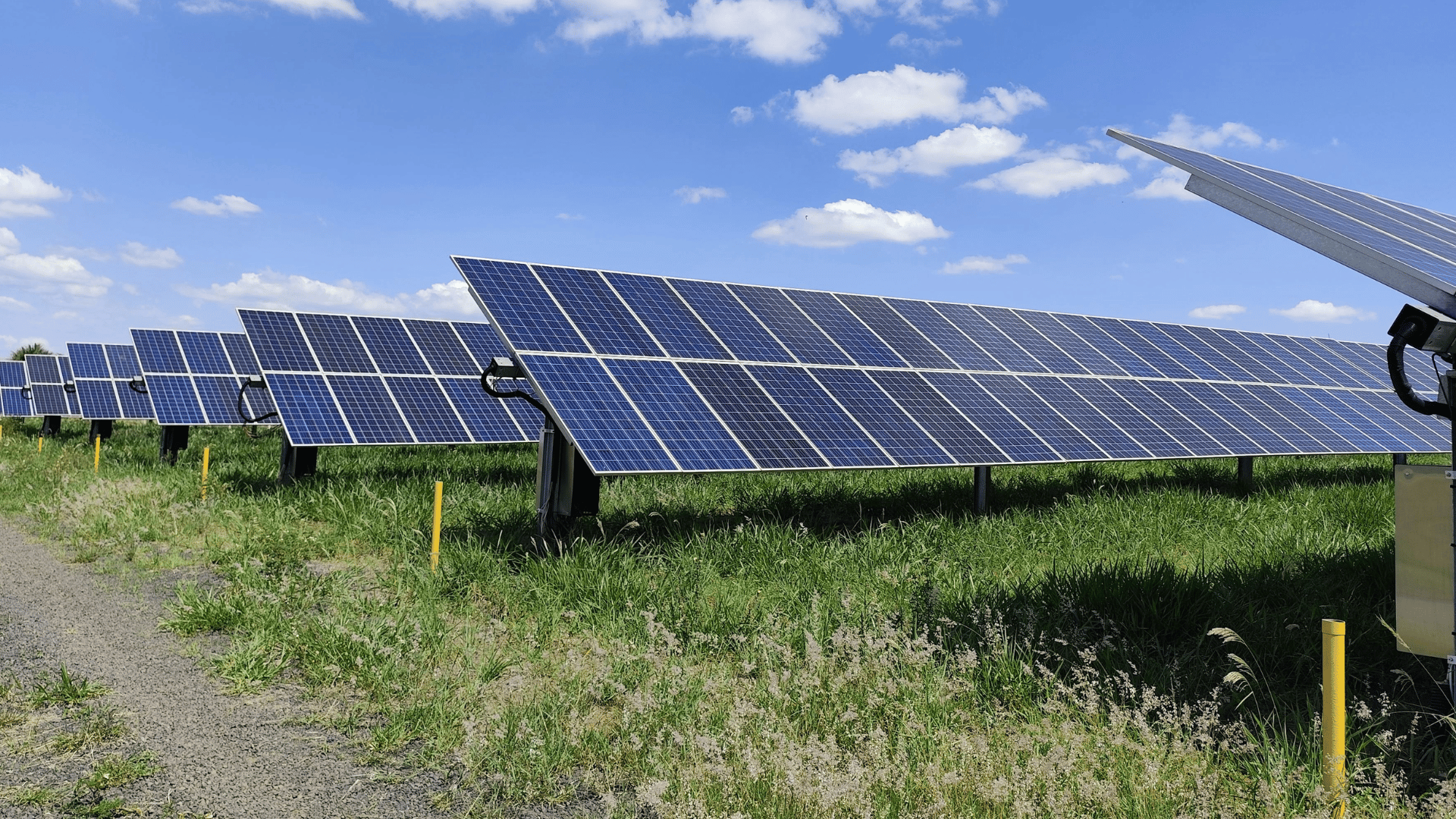
Solar Farm Vegetation Management: Moving from Reactive Control to Structured Integrated Programs
Over the past year we have spent time reviewing vegetation management approaches on a number of utility scale solar assets, especially those in high rainfall regions. One of the consistent observations is that many sites are operating under vegetation programs that have evolved reactively rather than being deliberately designed around the operational needs of the asset.
The challenges that appear across solar farms are remarkably consistent.
- Rapid biomass growth during the wet season.
- Grass species reaching heights of 600 to 800 mm.
- Vine growth interfering with panel infrastructure.
- Access limitations created by array mechanisms.
- Repeated mowing cycles that struggle to keep pace with growth.
These issues are common on large solar installations. However, they are often symptoms of a deeper structural problem within the vegetation management program.
A recent review of vegetation management planning on a solar farm reinforced several of these themes. The assessment found that while ecological surveys had successfully identified plant species, they did not translate that information into a structured operational vegetation strategy capable of managing infrastructure asset that spanned hundreds of hectares.
This is a common gap across the sector.
Solar farms are critical infrastructure assets. Vegetation management must support electrical safety, fire risk reduction, asset access, panel efficiency, and long-term maintenance cost control. Without a structured program these objectives become difficult to achieve.

A recurring issue is the lack of technical support during the development of vegetation management programs. Many programs rely on legacy approaches or generic ecological recommendations rather than infrastructure focused Integrated Vegetation Management frameworks.
This can result in over reliance on a small number of traditional knockdown chemistries. While current approaches may provide short term suppression, they rarely deliver long term vegetation stability across large solar installations.
At the same time there remains limited awareness within the sector of the range of modern chemistries now available.
Over the past decade herbicide technology has advanced significantly. Newer products provide more targeted control, improved environmental profiles and longer persistence where required. When integrated correctly into a structured program they can dramatically improve vegetation outcomes while reducing overall intervention frequency.
The key is moving away from reactive vegetation suppression and towards proactive vegetation management.
A well-designed solar farm program begins with clear vegetation zoning.
Areas where vegetation is desirable should be managed to maintain stable grass cover at controlled heights. These retained zones provide soil stability, reduce erosion risk, and improve site access.
In contrast, areas directly beneath panels and around electrical infrastructure require vegetation exclusion. In these zones vegetation must be prevented from establishing to avoid interference with infrastructure and reduce fire risk.
Each of these zones requires a different management approach.
In retained grass zones one of the most effective tools available today is the use of plant growth regulators. Products such as Padre provide an innovative solution for managing aggressive grass species within mown vegetation systems.
Padre works by suppressing vertical grass growth following mowing. In many situations this can extend the mowing interval to as much as four months, significantly reducing the number of mowing cycles required across large solar installations. The result is improved operational efficiency, lower maintenance costs, and a more stable vegetation profile between interventions.
Under panel zones require a different strategy altogether.
Rather than relying on repeated knockdown herbicide applications, modern asset management programs increasingly utilise soil binding pre-emergent herbicides applied in combination with knockdown treatments. These products remain where applied and prevent new weeds from establishing.
When applied correctly these treatments can provide vegetation control for up to 12 months beneath solar panels. This approach not only maintains cleaner infrastructure zones but also actively reduces the weed seed bank that builds up over time under repeated knockdown only programs.
The combination of vegetation zoning, plant growth regulators in retained zones and pre-emergent herbicides in exclusion zones represents a significant shift in how solar farm vegetation programs are designed.
It allows vegetation managers to move from a reactive model based on repeated mowing and knockdown spraying towards a proactive Integrated Vegetation Management system that stabilises vegetation across the entire asset.

Solar farms represent some of the fastest growing infrastructure assets in Australia. As these sites mature, vegetation management will increasingly play a critical role in maintaining operational efficiency, asset protection, and long-term maintenance cost control.
With the right technical support, modern chemistries, and structured vegetation programs these assets can be managed far more effectively than many current programs allow.
The key is recognising that solar farms require infrastructure grade vegetation management strategies rather than traditional landscape maintenance approaches.

Additional content
VIEW GWS' ADDITIONAL CONTENT TO LEARN MORE ABOUT THE WEED INDUSTRY
Selecting Herbicides Within an Integrated Vegetation Management Program
Effective herbicide selection begins long before a product is chosen. Within an Integrated Vegetation Management (IVM) program, herbicides are selected to support clearly defined management objecti...
Read more
Integrated Vegetation Management: Managing Outcomes, Not Treatments
A vegetation program is not defined by how many times a crew sprays or mows. It is defined by whether the asset is safe, functional and being managed to an agreed standard over time. Integrated Veg...
Read more
Supply disruption is a chance to review, plan and rotate.
When a major product becomes unavailable, it creates an important moment for the industry to pause, review and adapt. The recent supply disruption affecting a key industrial residual herbicide is a...
Read more