

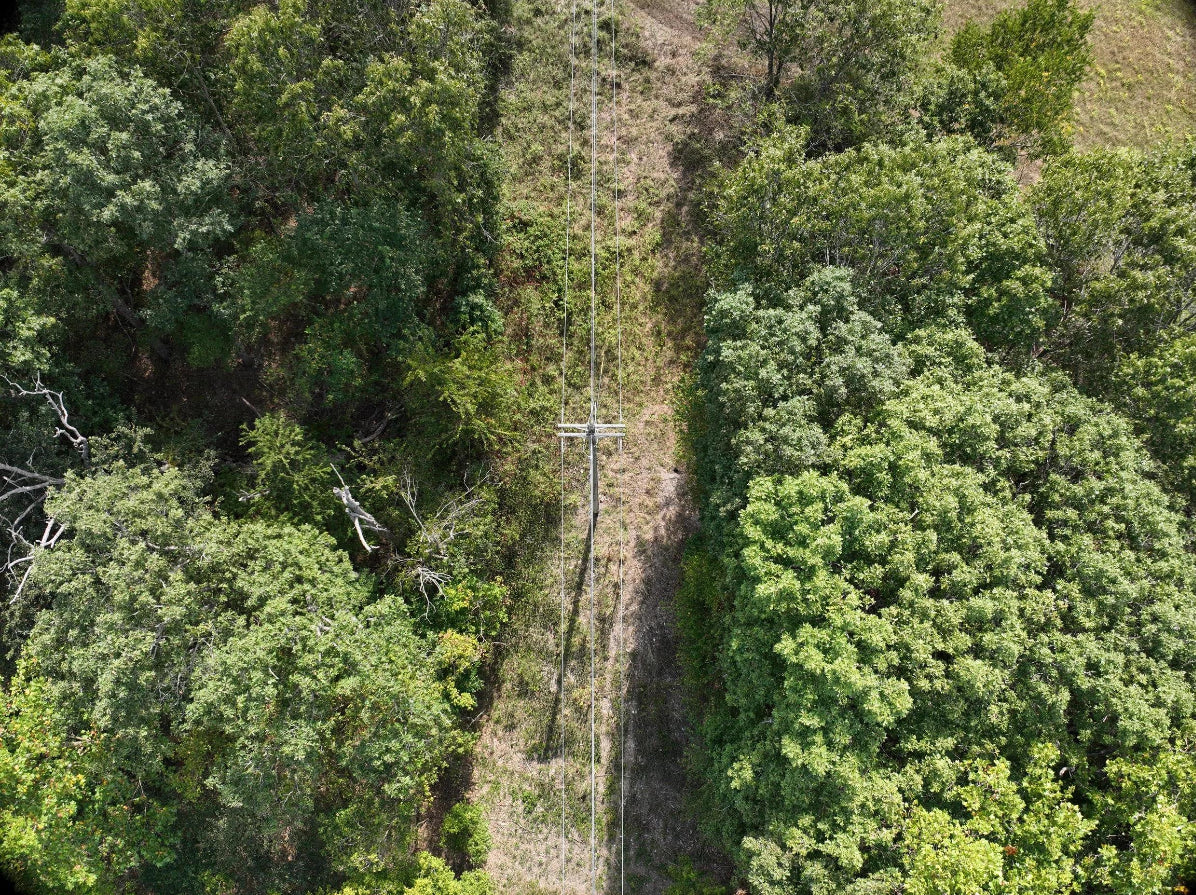
Artificial Intelligence and the Future of Infrastructure Vegetation Management
One of the more significant themes emerging from ROW 14 was the increasing integration of artificial intelligence into mainstream infrastructure and environmental management workflows.
While much of the broader public discussion around AI continues to focus on content generation and automation, conversations across the conference demonstrated that infrastructure organisations are now looking at something far more operationally significant: the integration of AI into complex infrastructure decision making systems.
A key session titled “Exploring AI Solutions for Environmental and Socioeconomic Assessment of Linear Infrastructure: Tools, Challenges, and Best Practices” explored how AI assisted systems are being used to support environmental assessment processes for major infrastructure projects.
The session focused on the use of AI to:
• Organise and analyse large volumes of stakeholder comments,
• Manage regulatory information requests,
• Improve workflow efficiency,
• Support collaboration across large project teams,
• Increase traceability and auditability,
• Reduce review and response timeframes.
While the presentation focused on environmental assessment processes, many of the underlying themes directly align with the future direction of utility vegetation management and infrastructure corridor operations.
The vegetation management sector continues to face increasing pressure around:
• Compliance and reporting,
• Environmental accountability,
• Operational transparency,
• Contractor coordination,
• Long term asset resilience,
• Risk based intervention planning,
• Stakeholder scrutiny,
• Data management across large infrastructure networks.
Historically, many infrastructure vegetation management programs have relied heavily on fragmented systems including spreadsheets, disconnected GIS platforms, contractor reporting systems and institutional knowledge held within individuals or individual businesses.
As infrastructure networks become more complex, those approaches are increasingly difficult to sustain efficiently.

The discussions throughout ROW 14 reinforced a growing industry transition toward integrated infrastructure intelligence systems where operational, environmental and compliance information become increasingly connected.
This aligns closely with themes explored earlier in the ROW 14 series, particularly Article 3 which examined the concept of “Vegetation as Infrastructure”.
That discussion highlighted the growing recognition that vegetation management now intersects directly with:
• Asset protection,
• Fire resilience,
• Drainage and hydrology,
• Slope stability,
• Environmental stewardship,
• Community expectations,
• Climate adaptation,
• Long term infrastructure performance.
Within that environment, AI assisted systems may eventually support:
• Corridor risk modelling,
• Predictive vegetation growth analysis,
• Integrated field intelligence,
• Automated compliance reporting,
• Treatment history analysis,
• Environmental constraint mapping,
• Improved operational prioritisation,
• Faster regulator and stakeholder response capability.

Importantly, AI is unlikely to replace operational expertise, field knowledge or environmental science capability.
Its value will increasingly come from helping infrastructure organisations manage, interpret and operationalise very large volumes of information across long term infrastructure programs.
The broader implication from ROW 14 was clear: the infrastructure sector is rapidly moving toward intelligence driven operational models where data integration, traceability and defensible decision making become core components of infrastructure management itself.
For the vegetation management sector, that transition is likely to fundamentally change how future infrastructure vegetation management programs are planned, prioritised, delivered and defended.

Additional content
VIEW GWS' ADDITIONAL CONTENT TO LEARN MORE ABOUT THE WEED INDUSTRY
Selecting Herbicides Within an Integrated Vegetation Management Program
Effective herbicide selection begins long before a product is chosen. Within an Integrated Vegetation Management (IVM) program, herbicides are selected to support clearly defined management objecti...
Read more
Integrated Vegetation Management: Managing Outcomes, Not Treatments
A vegetation program is not defined by how many times a crew sprays or mows. It is defined by whether the asset is safe, functional and being managed to an agreed standard over time. Integrated Veg...
Read more
Supply disruption is a chance to review, plan and rotate.
When a major product becomes unavailable, it creates an important moment for the industry to pause, review and adapt. The recent supply disruption affecting a key industrial residual herbicide is a...
Read more