

Rethinking Vegetation Management: From Compliance to Condition
This article summarises key insights from a presentation delivered in April 2026 by Professor Lawrence J. Kahn, Distinguished Research Fellow at the Tulane Center for Environmental Law and Director of the Tulane Utility Vegetation Management Initiative, as part of the Greenway Solutions national Utility Vegetation Management workshop series.

1. Compliance Versus Safety
Current vegetation management frameworks across Australia and comparable international jurisdictions are heavily compliance driven. These systems rely on measurable and enforceable standards such as clearance distances, inspection intervals, and defect classifications.
While these measures provide consistency and legal defensibility, they do not necessarily correlate with actual risk outcomes. Field evidence demonstrates that vegetation can meet compliance thresholds while still presenting a high bushfire or reliability risk due to condition factors not captured within existing standards.
Conclusion: Compliance should be treated as a minimum baseline, not a proxy for safety.
2. Limitation of Clearance Based Frameworks
Clearance based models focus on spatial separation between vegetation and assets. However, they do not account for key risk drivers, including fuel load, fuel continuity, vegetation health and stress, failure likelihood under weather conditions, and site-specific fire behaviour.
This creates a structural gap between what is measured and what actually drives ignition and fire spread.
Conclusion: Vegetation management must transition from distance-based assessment to condition based risk evaluation.
3. Data Availability Versus Decision Impact
The sector has access to increasing volumes of data through remote sensing, field inspections, and historical records. Tools such as Normalised Difference Vegetation Index are expanding the ability to monitor vegetation condition at scale.
However, the presentation identified that data is often underutilised. In many cases, available data does not influence operational decisions due to regulatory constraints, organisational structure, or reliance on compliance-based frameworks.
Conclusion: Data has limited value unless it is directly integrated into decision making and triggers action.
4. Limitations of Metrics and Performance Based Systems
Both prescriptive and performance based regulatory models are subject to behavioural distortion. When specific metrics are used to measure success, organisations and individuals optimise toward those metrics rather than the underlying objective.
This aligns with the principle of Goodhart’s Law, where a measure loses effectiveness once it becomes the target.
Examples include optimisation of clearance compliance, inspection frequency, or cost efficiency without corresponding improvement in risk reduction.
Conclusion: Metrics must be carefully designed and supplemented with judgement to avoid misaligned outcomes.
5. The Unmeasurable Outcome Challenge
Effective vegetation management aims to prevent events that do not occur, including fires, outages, and incidents. These outcomes are inherently difficult to measure directly.
As a result, systems rely on proxy indicators, which can diverge from actual risk conditions over time.
Conclusion: Outcome based evaluation must rely on aggregated trends and system performance over time, rather than individual measurable events.
6. Capability Requirements at Field Level
The transition to condition-based management requires a corresponding shift in workforce capability. Arborists and field crews are positioned as the primary observers of real-world conditions.
To support this role, they require expanded training in wildfire risk recognition, fuel dynamics, and site level risk interpretation.
Conclusion: Qualification frameworks should evolve to include risk assessment capability, not just task execution.
7. Integration of Indigenous Knowledge and Scientific Evaluation
Indigenous land management practices, including cultural burning, provide valuable long term observational knowledge of landscape behaviour. However, current environmental conditions differ significantly from historical baselines due to changes in climate, vegetation, and land use.
The recommended approach is to integrate Indigenous knowledge with scientific measurement and operational testing to determine where specific practices are most effective.
Conclusion: Knowledge systems should be combined and validated through evidence-based application.
8. Ecological and Temporal Trade Offs
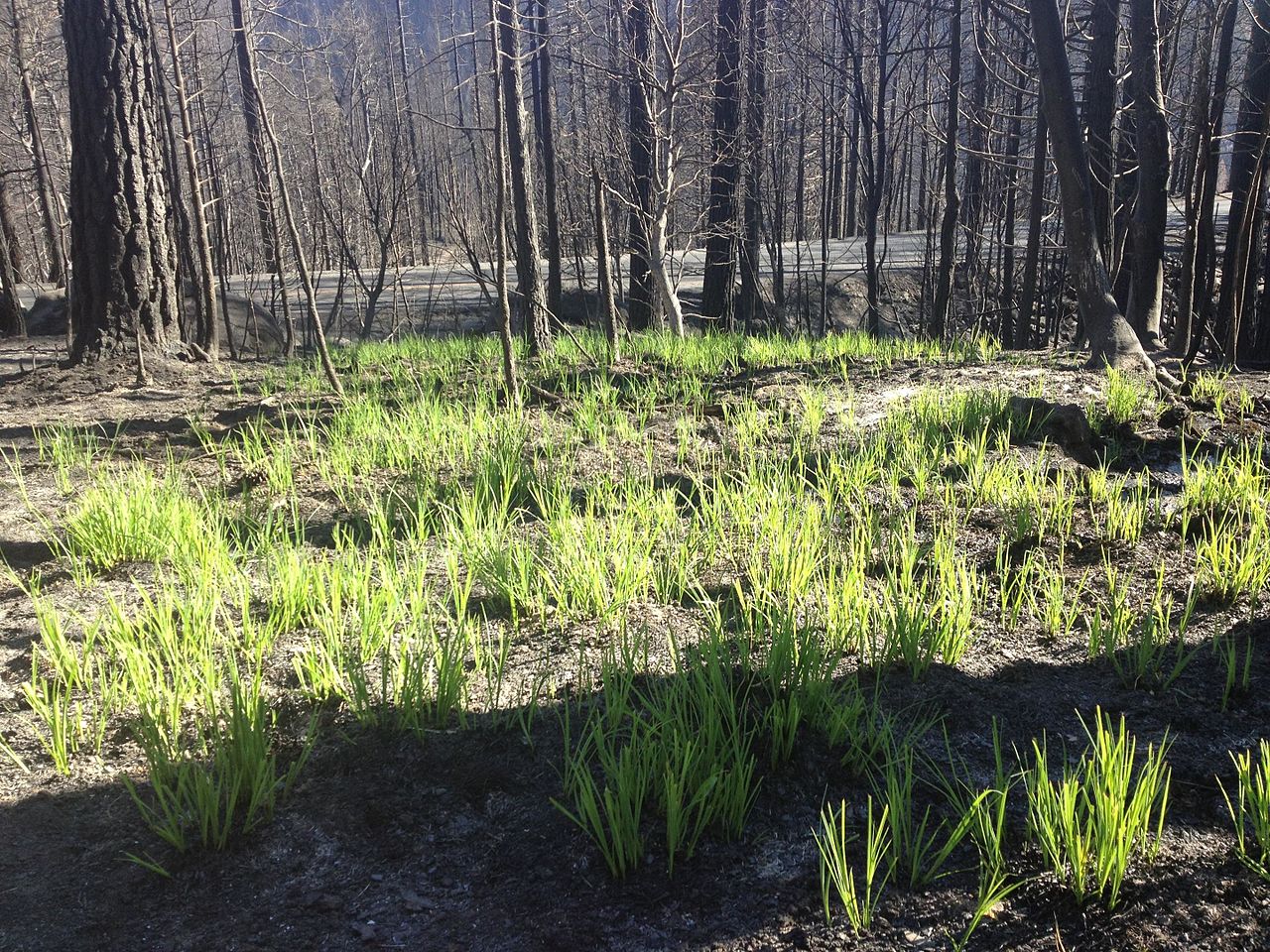
Vegetation management decisions involve balancing immediate risk reduction with long term ecological outcomes. Examples include decisions around retaining or removing fire affected vegetation that may regenerate over extended timeframes.
Conclusion: Decision making must account for both short term risk and long-term landscape resilience.
9. System Fragmentation and Accountability
Responsibility for vegetation and bushfire risk is distributed across multiple stakeholders, including utilities, regulators, land managers, and communities. Each entity operates under different objectives and frameworks.
This fragmentation leads to inefficiencies, conflicting actions, and gaps in risk management.
Conclusion: No single entity controls total risk. Coordinated planning and shared accountability frameworks are required.
10. Emerging Economic Signal: Insurability
The presentation highlighted the growing challenge of wildfire risk becoming uninsurable in certain regions. This represents a critical system level signal that risk is exceeding manageable thresholds under current frameworks.
Conclusion: Financial system responses such as insurance availability provide an early indicator of systemic failure.
11. Requirement for Coordinated System Response
Recent international responses following major wildfire events demonstrate a shift toward recognising bushfire risk as a shared responsibility across all stakeholders.
Effective management requires integration of planning, data sharing, and aligned execution across jurisdictions and organisations.
Conclusion: Isolated optimisation by individual entities is insufficient. System level coordination is required.
12. Role of the UVM Project
The Utility Vegetation Management (UVM) project is positioned as a collaborative platform to address the identified gaps. Its functions include knowledge sharing, cross jurisdictional collaboration, pilot testing, and integration of academic and operational expertise.
Early outcomes include international technology exchange and joint testing initiatives between Australia and North America.
Conclusion: Structured collaboration is essential to accelerate learning and system adaptation.
Final Position
Vegetation management is currently being conducted within frameworks designed for historical conditions. Environmental, climatic, and operational realities have changed significantly.
To maintain safety, reliability, and long-term sustainability, the sector must transition to:
- Condition based risk management
- Integrated knowledge systems
- Enhanced field capability
- Coordinated stakeholder frameworks
- Accelerated learning cycles
This represents a structural evolution rather than incremental improvement.

Additional content
VIEW GWS' ADDITIONAL CONTENT TO LEARN MORE ABOUT THE WEED INDUSTRY
Selecting Herbicides Within an Integrated Vegetation Management Program
Effective herbicide selection begins long before a product is chosen. Within an Integrated Vegetation Management (IVM) program, herbicides are selected to support clearly defined management objecti...
Read more
Integrated Vegetation Management: Managing Outcomes, Not Treatments
A vegetation program is not defined by how many times a crew sprays or mows. It is defined by whether the asset is safe, functional and being managed to an agreed standard over time. Integrated Veg...
Read more
Supply disruption is a chance to review, plan and rotate.
When a major product becomes unavailable, it creates an important moment for the industry to pause, review and adapt. The recent supply disruption affecting a key industrial residual herbicide is a...
Read more