
A Self Improving Integrated Vegetation Management Program Supported by Satellite Intelligence
Utility vegetation management is increasingly moving beyond fixed maintenance cycles and into an era of continuous operational intelligence.
That shift was strongly reinforced during a ROW14 presentation from Liberty Utilities and LiveEO, focusing on how satellite intelligence is now being integrated directly into vegetation management operations to improve visibility, prioritisation and long term operational decision making.
While the presentation focused on Liberty Utilities’ operational program development, many of the themes strongly aligned with broader industry discussions that Nick Ferguson and the LiveEO team have been consistently advancing through presentations, webinars and the UVM Podcast series over recent years.

At the centre of that discussion is a relatively simple but important shift in thinking.
Rather than treating vegetation management as a repeating maintenance cycle, utilities are increasingly beginning to view vegetation management as a continuously improving operational learning system.
Historically, many vegetation management programs have relied heavily on:
• fixed patrol intervals,
• cyclical inspection programs,
• scheduled maintenance windows,
• reactive hazard identification,
• visible corridor assessment.
While operationally effective in many situations, those approaches can still leave utilities exposed to:
• off corridor hazard trees,
• vegetation stress,
• disease development,
• decline progression,
• changing vegetation conditions occurring between inspection cycles,
• fall in risks developing outside standard patrol visibility.
The presentation reinforced how satellite intelligence can significantly improve operational visibility beyond the traditional right of way itself.
By identifying early indicators of vegetation stress, decline and changing canopy condition, utilities are increasingly able to move toward more targeted and risk prioritised intervention frameworks.
One of the more important operational concepts discussed throughout the presentation was the idea of vegetation management evolving into a continuous learning system rather than a fixed maintenance cycle.
Through repeated observation, validation, field feedback and operational refinement, satellite intelligence allows utilities to progressively improve visibility, confidence and prioritisation across the network over time.
Rather than relying solely on static inspection intervals, operational systems can increasingly adapt as vegetation condition, environmental stress and infrastructure risk change across the corridor.

This represents a significant shift away from traditional broad cycle based vegetation management and toward:
• continuous risk visibility,
• targeted intervention,
• condition based management,
• predictive operational planning,
• integrated vegetation intelligence,
• dynamic corridor prioritisation.
Another major theme emerging from the session was the increasing integration between satellite intelligence and operational field execution.
The presentation reinforced that remote sensing and satellite systems are not replacing operational expertise or field capability.
Their value comes from improving visibility across very large infrastructure networks and helping utilities:
• prioritise inspections,
• identify emerging risks earlier,
• optimise workforce deployment,
• improve operational timing,
• support reliability outcomes,
• improve resource allocation.
The ability to identify off corridor hazards before they become infrastructure incidents is particularly significant within modern utility vegetation management.
This becomes increasingly important as utilities continue facing:
• increasing network complexity,
• workforce limitations,
• expanding vegetation pressure,
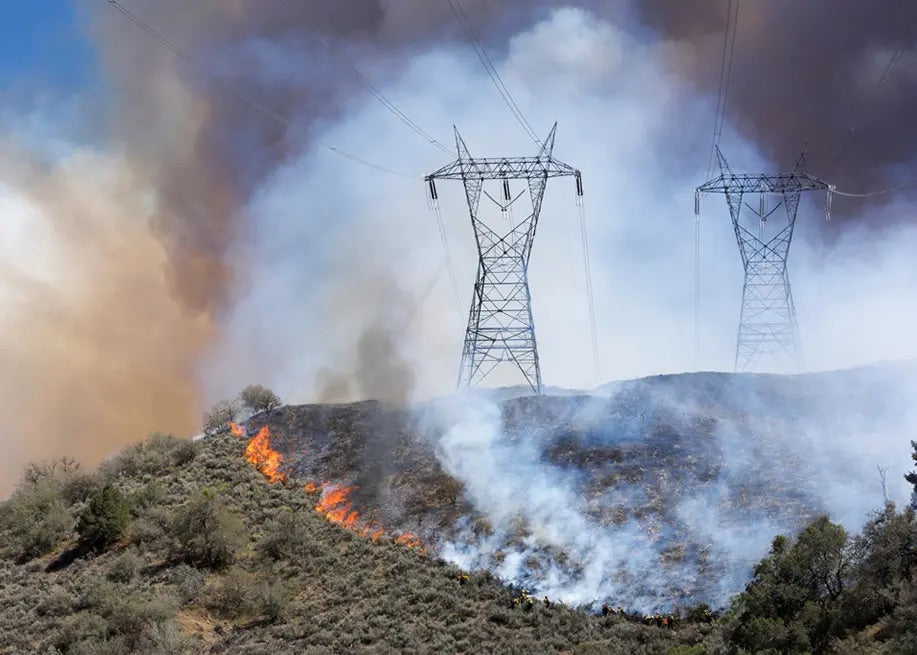
• wildfire risk,
• environmental accountability,
• regulatory scrutiny,
• growing expectations around infrastructure resilience.
The broader operational implication is that vegetation management programs are increasingly becoming intelligence driven infrastructure systems rather than isolated maintenance activities.
This aligns strongly with several major themes emerging consistently throughout the ROW14 series including:
• vegetation as infrastructure,
• integrated vegetation management,
• operational intelligence,
• predictive analytics,
• measurable corridor condition,
• risk based intervention,
• long term corridor resilience.
The presentation also reinforced the importance of integrating operational systems rather than relying on fragmented data environments.
Future utility vegetation management programs are increasingly likely to rely on connected operational ecosystems where:
• satellite intelligence,
• remote sensing,
• field operations,
• GIS platforms,
• risk modelling,
• operational analytics,
• asset management systems,
• workforce planning,
become increasingly integrated into a unified operational framework.
The overall direction emerging from the session was clear.
Utility vegetation management is rapidly transitioning from fixed cyclical maintenance programs toward continuously improving, intelligence driven and risk prioritised operational systems supported by satellite intelligence, integrated vegetation management frameworks and continuous operational learning.
That transition is likely to fundamentally reshape how future vegetation management programs are planned, prioritised, monitored and delivered globally.

Additional content
VIEW GWS' ADDITIONAL CONTENT TO LEARN MORE ABOUT THE WEED INDUSTRY
Selecting Herbicides Within an Integrated Vegetation Management Program
Effective herbicide selection begins long before a product is chosen. Within an Integrated Vegetation Management (IVM) program, herbicides are selected to support clearly defined management objecti...
Read more
Integrated Vegetation Management: Managing Outcomes, Not Treatments
A vegetation program is not defined by how many times a crew sprays or mows. It is defined by whether the asset is safe, functional and being managed to an agreed standard over time. Integrated Veg...
Read more
Supply disruption is a chance to review, plan and rotate.
When a major product becomes unavailable, it creates an important moment for the industry to pause, review and adapt. The recent supply disruption affecting a key industrial residual herbicide is a...
Read more