

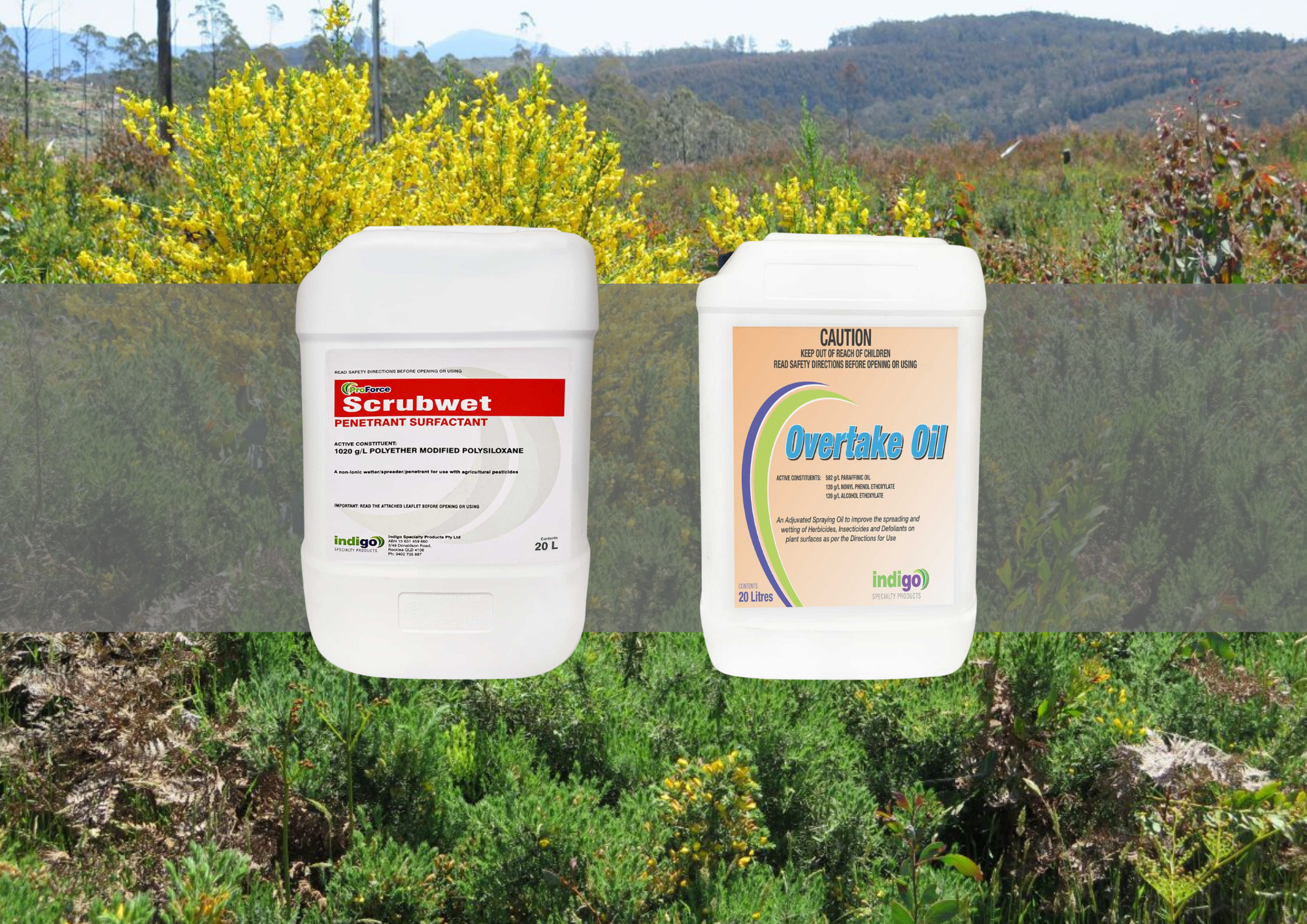
Enhancing Herbicide Performance: Understanding the Benefits of Overtake Oil and Scrubwet
In the realm of vegetation management, maximising the effectiveness of herbicides is paramount for achieving desired outcomes.
Two key products by Indigo Specialty products, Overtake Oil and Scrubwet, offer unique advantages that cater to different needs and situations in weed control strategies.
Overtake Oil:

With its innovative dual-action formula, stands out as a game-changer in herbicide enhancement. Combining surfactant properties with an oil component, Overtake Oil serves as a powerful tool for improving the performance of non-selective herbicides, such as glyphosate.
The surfactant aspect of Overtake Oil helps to strip the cuticle of target plants, facilitating better penetration of herbicides into the plant tissues. Meanwhile, the oil component aids in overcoming physical barriers like plant hairs, ensuring deeper and more thorough coverage of the herbicide.
This dual mechanism of action makes Overtake Oil particularly effective for achieving total weed control, where comprehensive eradication is desired.
Read more about Overtake Oil here:
Scrubwet:

This product offers a different approach to herbicide enhancement, focusing on superior wetting properties without the addition of an oil component. As a super-wetter, Scrubwet excels in spreading and penetrating the cuticles of target plants, making it ideal for woody weed control. Its ability to coat both sides of leaves ensures better herbicide retention and coverage, leading to more effective control of stubborn weeds in challenging environments.
Read more about Scrubwet here:
Deciphering Between Products:
Choosing between Overtake Oil and Scrubwet depends on the specific needs of each situation.
Overtake Oil shines in scenarios where total weed control is the primary goal, especially when using non-selective herbicides like glyphosate. Its dual-action formula ensures thorough penetration and coverage, making it suitable for broad-scale eradication efforts.
In contrast, Scrubwet is better suited for woody weed control, particularly in areas with dense vegetation or hard-to-reach plant surfaces. It's superior wetting properties enable better herbicide retention and coverage on leaves, ensuring effective control of woody species.
Both Overtake Oil and Scrubwet offer valuable benefits for enhancing herbicide performance in vegetation management. Understanding their unique mechanisms of action and knowing when to deploy each product can significantly improve the efficacy of weed control efforts. By leveraging the strengths of these products, land managers and vegetation control professionals can achieve more efficient and effective outcomes in weed management projects.

Additional content
VIEW GWS' ADDITIONAL CONTENT TO LEARN MORE ABOUT THE WEED INDUSTRY
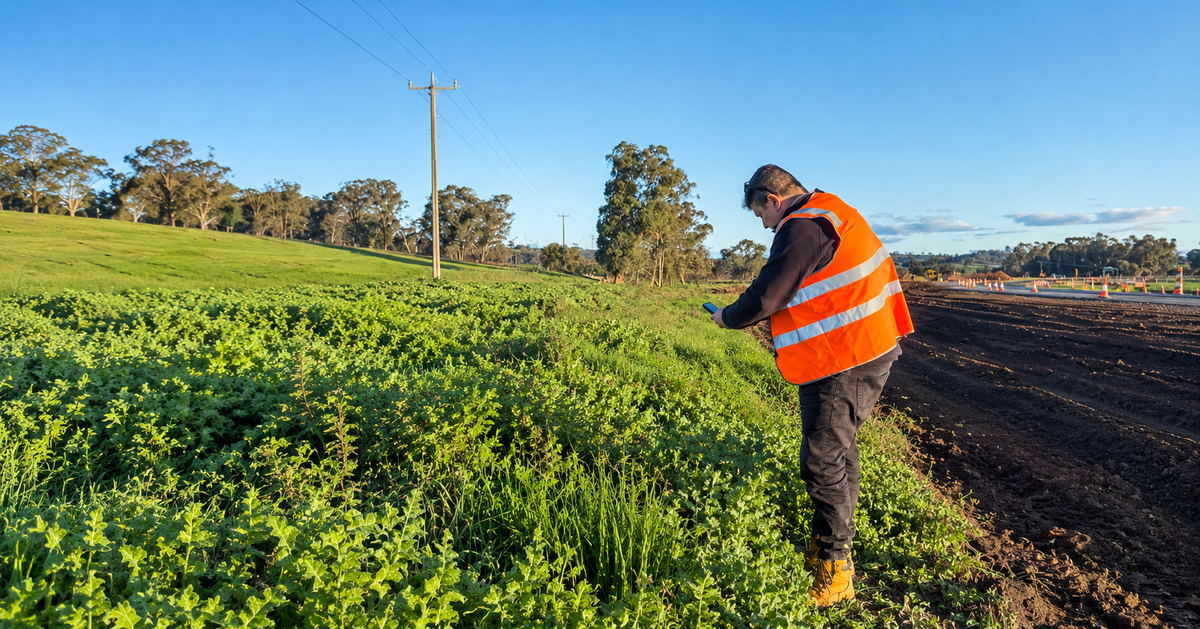
Selecting Herbicides Within an Integrated Vegetation Management Program
Effective herbicide selection begins long before a product is chosen. Within an Integrated Vegetation Management (IVM) program, herbicides are selected to support clearly defined management objecti...
Read more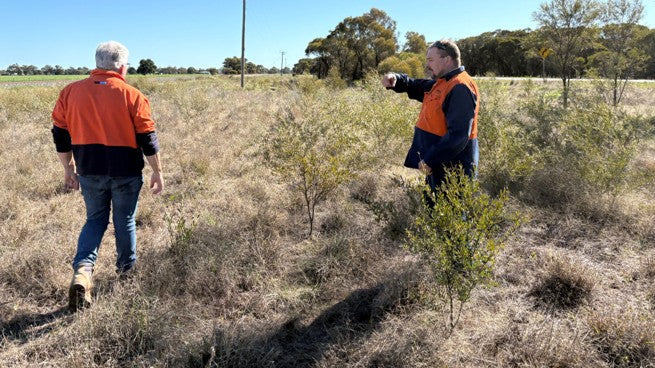
Integrated Vegetation Management: Managing Outcomes, Not Treatments
A vegetation program is not defined by how many times a crew sprays or mows. It is defined by whether the asset is safe, functional and being managed to an agreed standard over time. Integrated Veg...
Read more
Supply disruption is a chance to review, plan and rotate.
When a major product becomes unavailable, it creates an important moment for the industry to pause, review and adapt. The recent supply disruption affecting a key industrial residual herbicide is a...
Read more